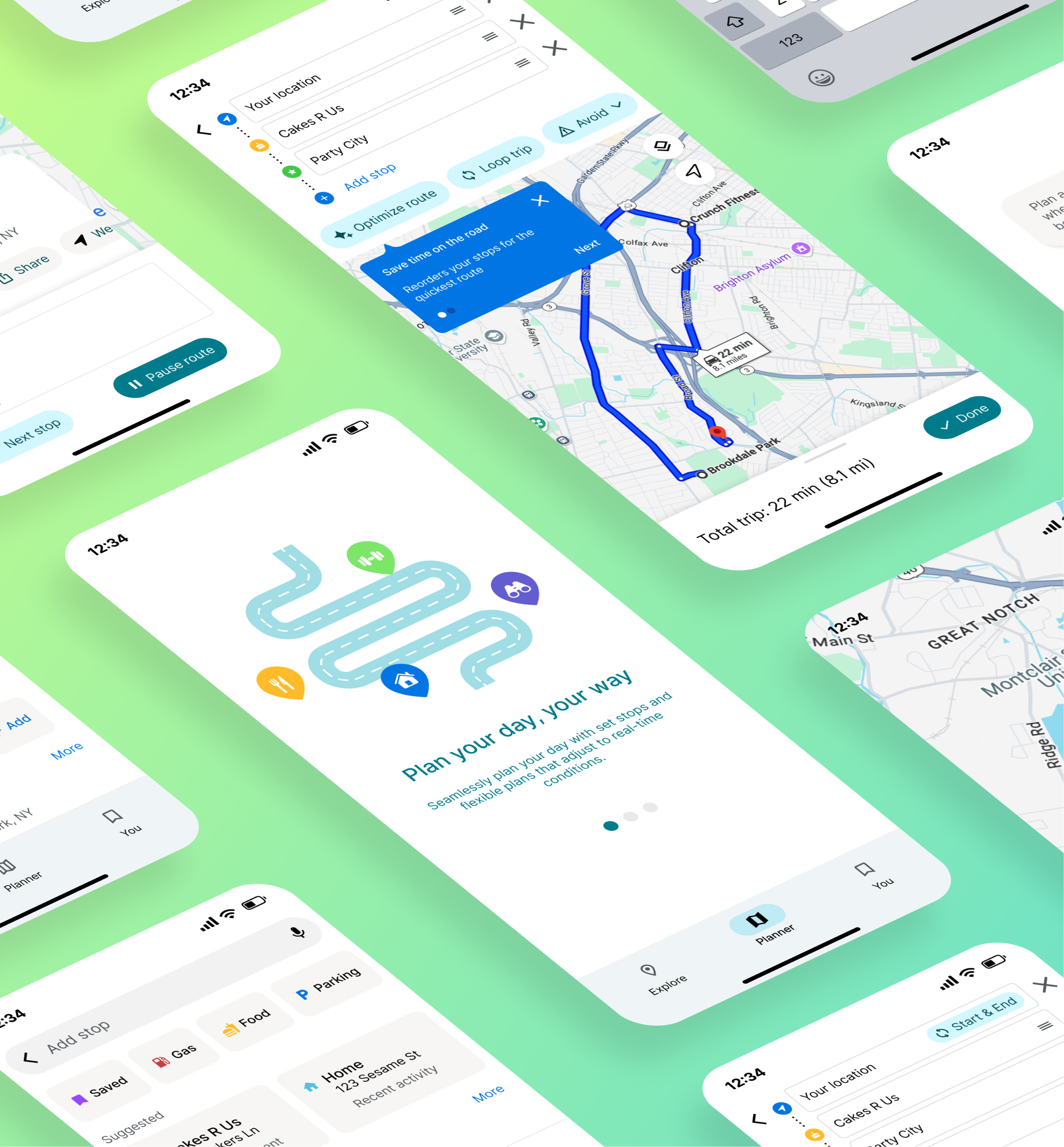
This academic UX project explored how Google Maps’ multi-stop routing feature could better support real-life, time-sensitive errands. While the functionality exists, it is underutilized due to poor discoverability, manual effort, and limited flexibility when plans change.
The goal was to design a more intuitive, confidence-building experience that aligns with how people actually plan their day.
Users rely on Google Maps daily, but multi-stop planning introduces friction.
Common pain points included:
As a result, many users avoided the feature altogether.
The project was informed by user interviews and synthesis, focusing on how people approach errands and daily planning.
Key insights:
These insights shaped both the structure and interactions of the solution.
Rather than reinventing navigation, the solution focused on improving clarity and flow within Google Maps’ existing mental model.
Key ideas included:
Designs were iterated through sketches, wireframes, and high-fidelity prototypes aligned with Google Maps’ visual language.
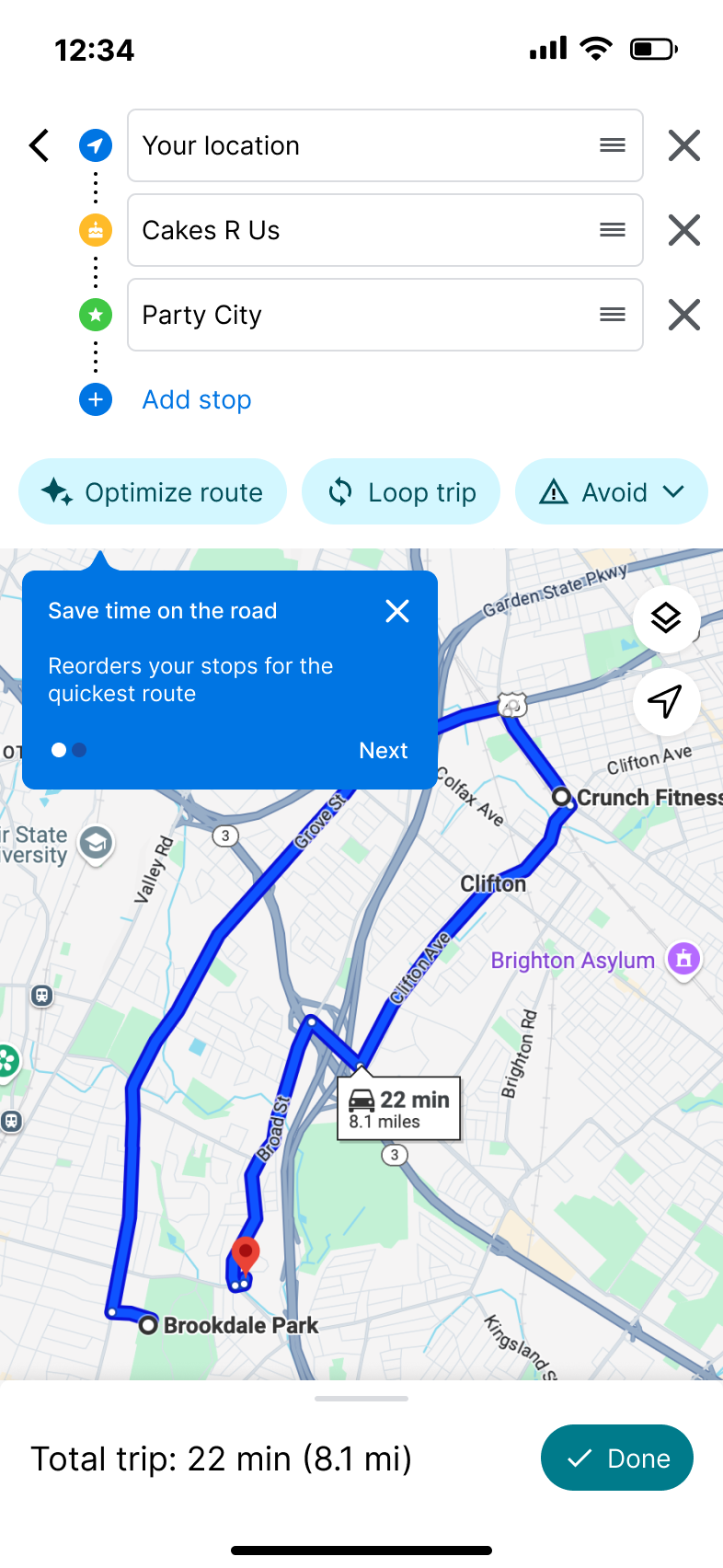
The final prototype demonstrated a more proactive multi-stop experience that:
The result reframed multi-stop routing as day planning, not just navigation.

A design agency helping to get your digital identity up and running for good.